The Warning Signs Show Up Long Before the Missed Deadlines

By the time delivery is visibly failing, the system has already been under strain for months. It usually looks like this:

  • Teams are shipping, but progress feels fragile
  • Estimates keep expanding without clear explanation
  • Ownership is distributed, but accountability is unclear
  • Decisions take longer, even when everyone agrees
  • Cloud and tooling costs rise faster than confidence

These are not people problems. They are system problems.

Left unaddressed, these signals compound—not gradually, but suddenly.

Simon smiling widely while sitting in a coffee shop with a cup of coffee in his hand.

Hiring Faster Doesn’t Fix a Broken Execution System

Early on, more capacity helps. Shared context is high, coordination is cheap, and most work is parallelizable.

That math breaks as systems scale.

Past a certain point, every additional engineer increases coordination cost, decision latency, and dependency load. Hiring amplifies unclear priorities and weak ownership models.

When leadership solves for capacity instead of system design, execution slows even as headcount grows.

This is how organizations double spend and halve predictability without realizing why.

Simon in an open office looking down the hallway and holding a smart phone

The Bottleneck Shifts Before Anyone Notices

At scale, execution fails upstream of delivery.

The real constraints become:

  • How decisions are made
  • Who owns cross-cutting outcomes
  • How tradeoffs are surfaced and resolved
  • Whether cost, reliability, and speed are governed intentionally

When these mechanisms are weak, teams compensate with heroics. That works until it doesn’t.

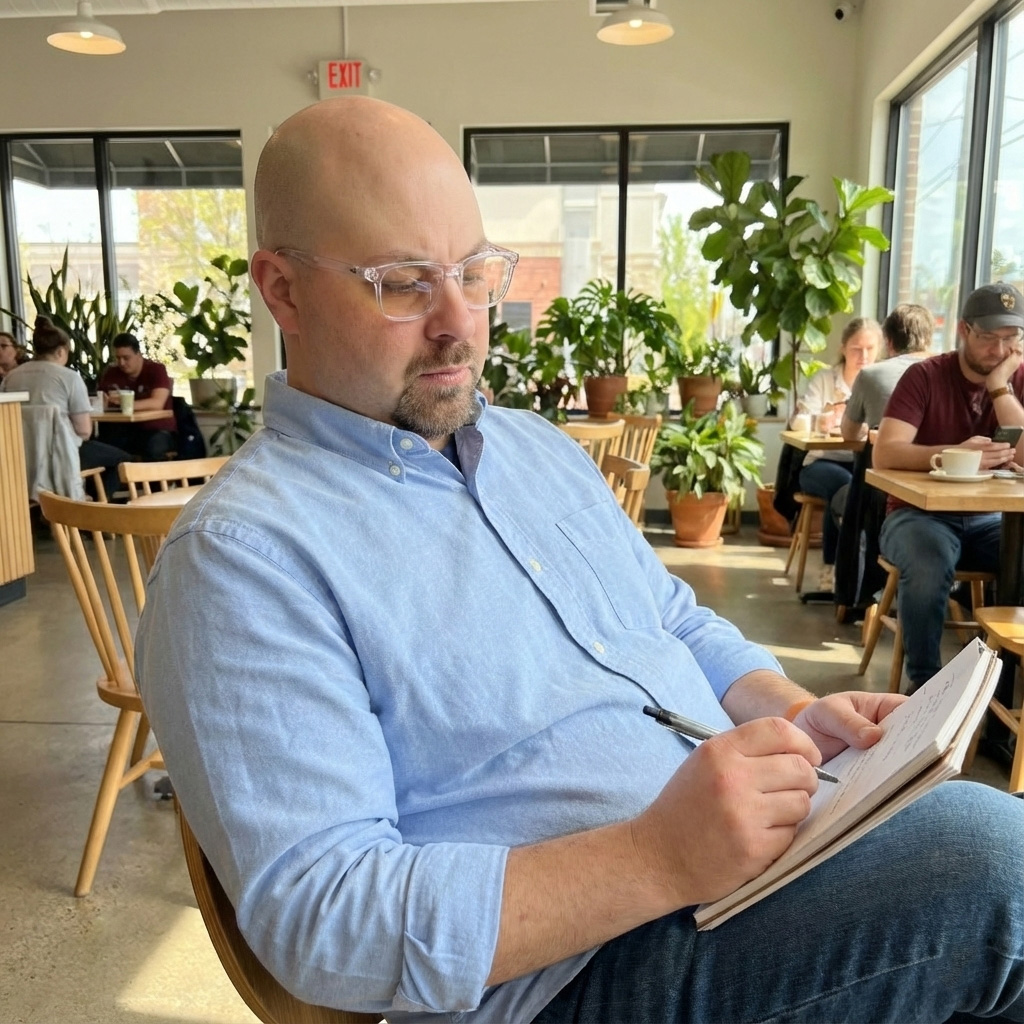
Simon sitting in a coffee shop, legs crossed, writting in a paper notebook with a pen

I Work at the Decision Layer, Not the Task Layer

My role is not to manage tickets or deliver features.
I work with executives to:

  • Clarify ownership across product, engineering, and data
  • Reduce decision latency and escalation paths
  • Align architecture and operating rhythms to business reality
  • Restore predictability without slowing momentum

This is system-level intervention, not task execution.

Simon standing outside a conference room, laptop under his arm and walking to the next meeting

This Is Advisory Work, Not Staff Augmentation

If that distinction feels uncomfortable, this is probably not the right fit.

This work is not a fit if you are looking for:

  • Extra hands to increase throughput
  • A generic AI or cloud strategy
  • A long roadmap deck without accountability

It is a fit when leadership wants clarity, leverage, and fewer late surprises as systems scale.

Execution remains with your teams. I help ensure the system they are operating inside actually works.

Simon in a coffee shop, leaning forward on a couch towards his laptop while sitting across from a collaborator

Where Execution Quietly Breaks Down at Scale

By the time execution visibly slows, the underlying system has already been under strain. Across startups and large platforms, the failure modes are remarkably consistent.

The patterns below are the situations I am typically brought in to diagnose and correct. These patterns rarely appear in isolation. Most organizations experience three or more simultaneously.

Cloud spend rises, ownership stays unclear

AWS bills trend up month over month, but nobody can explain the top drivers, who owns them, or what “good” looks like.

Decision latency becomes the real bottleneck

Work is not blocked by effort. It is blocked by slow prioritization, unclear tradeoffs, and too many “shared” decisions that nobody truly owns.

Platform complexity outgrows the operating model

The architecture makes sense in pieces, but not as a system. Dependencies multiply, ownership fragments, and delivery becomes a coordination tax.

Reliability risk hides until peak traffic exposes it

Incidents are treated as surprises instead of signals. The system runs “fine” until it is under stress, then confidence collapses fast.

Product and engineering drift into parallel realities

Roadmaps become negotiation artifacts. Engineering is busy, product is frustrated, and leadership cannot tell whether they are under-resourced or misaligned.

Cross-team work turns into a dependency maze

Delivery slows because every meaningful outcome crosses too many boundaries. The system lacks clear interfaces, escalation paths, and accountability.

Restoring Clarity Creates Measurable Leverage

When execution systems are realigned, the results compound quickly:

  • Multi-million-dollar annual cloud cost reductions
  • Elimination of recurring reliability regressions
  • Faster scaling during high-risk events
  • Improved delivery predictability without adding headcount

Without intervention, these same systems usually respond by hiring more, spending more, and trusting less.

The common thread is not effort. It is alignment.

Simon sitting at an outdoor cafe in the morning sun working on his laptop computer

The First Step Is a Short Diagnostic — Not a Commitment

Most engagements begin with a focused diagnostic.
Over a short window, we examine:

  • Where execution is breaking down
  • What is driving cost and delivery risk
  • Which decisions are unclear or misowned
  • What to fix now versus later

You leave with an executive-level readout and a clear recommendation on whether deeper advisory work makes sense.

Not every situation warrants deeper engagement. The diagnostic is how we determine that quickly. It is designed to create clarity, not lock you into a longer engagement.

Simon sitting at a high top table gazing out the window into the sun

If This Feels Familiar, Ignoring It Will Be More Expensive Than Addressing It

The conversation is how we determine which is true. If your organization feels busy but less predictable than it should, that is a signal worth examining.

Start with a conversation. We will quickly determine whether this is a fit.

hi mom

Start a Conversation

This form is for leaders who feel execution becoming less predictable as systems scale.

If that is the situation, share a bit of context below. I review every submission personally and will follow up if it appears useful to explore further.


Note: this is not a sales process. It’s a diagnostic conversation.